
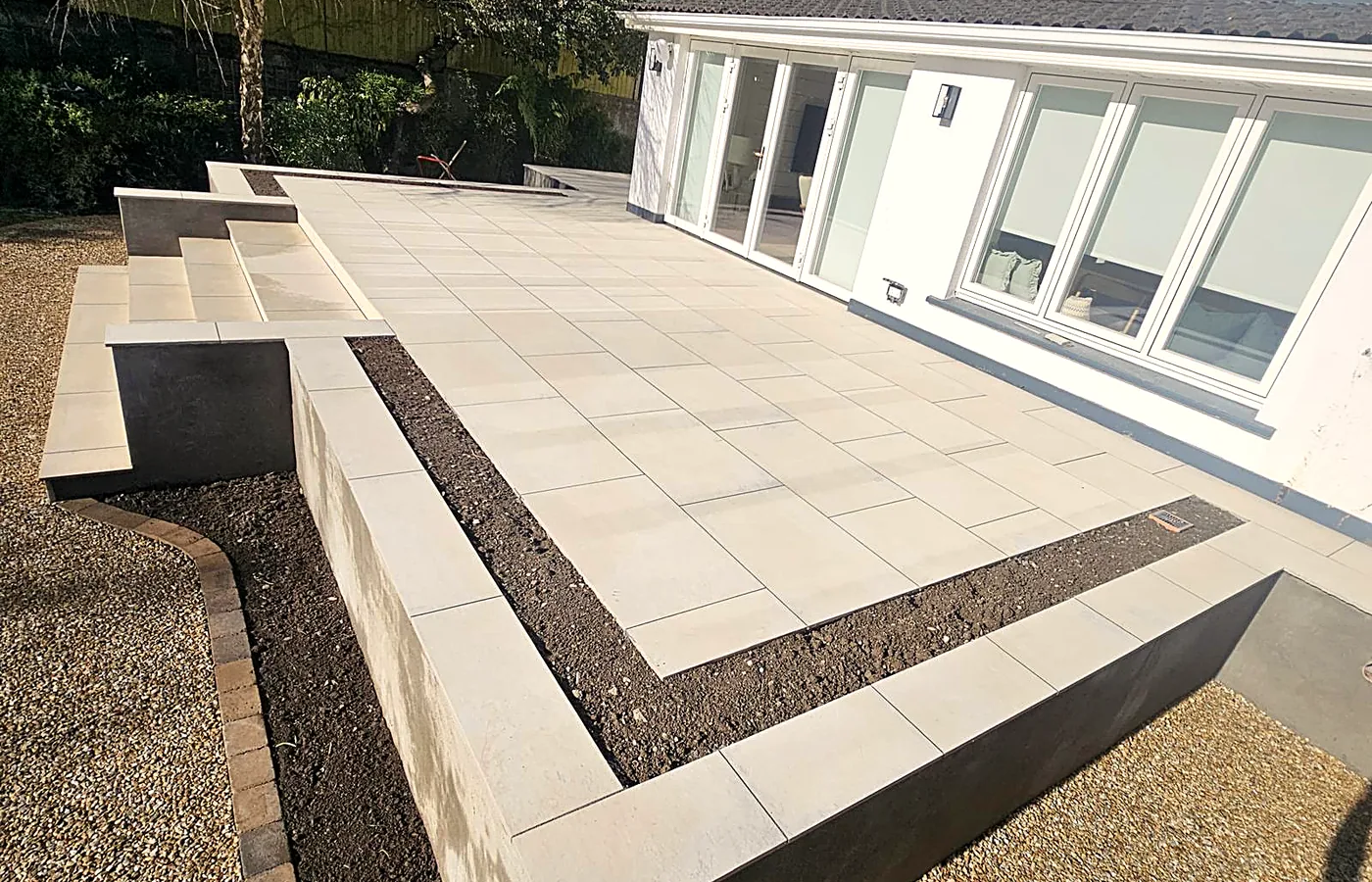
The right paving slabs for a patio depend on how much upkeep you want. Porcelain slabs need the least looking after, sandstone and limestone bring the colour of real stone, granite is the hardest of the natural stones, and concrete slabs cost the least to buy and show their age soonest. James lays all of the stone options across South Dublin, and the bed under a slab matters as much as the slab. See the patios we have laid across South Dublin.
At a glance
- Porcelain needs the least looking after, and it must go on a full bed
- Sandstone and limestone bring colour, and need sealing and a wash
- Concrete slabs cost least to buy and show their age soonest
Are Porcelain Slabs Good For A Patio?
Yes, if the upkeep matters most to you. Porcelain is fired hard, so it does not fade or stain and asks for little more than a wash. The outdoor grade is textured and slip-rated. It costs more than concrete, and because it barely takes up water, it has to go on a full bound bed. Set on spots of mortar it rocks and then cracks. See the porcelain patios we have laid.
Are Sandstone Or Limestone Slabs Better?
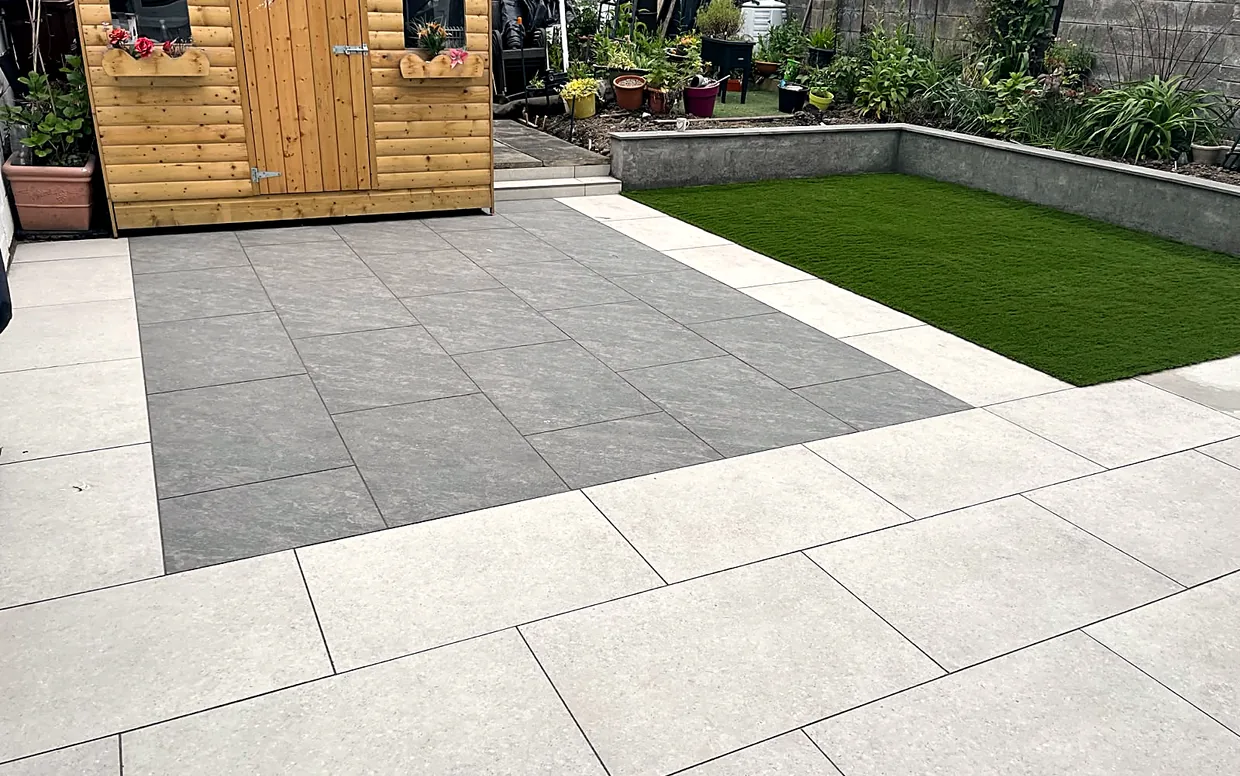
Sandstone has the warmest colour, with bands of rust, buff and grey in each slab. Limestone is cleaner and more even, and it suits a modern house. Both need sealing and an occasional wash, and a shaded garden will show green on them sooner than on porcelain. Egyptian limestone anchors the walled garden in Clonskeagh, and we lay both as natural stone patios.
Is Granite Worth It For A Patio?
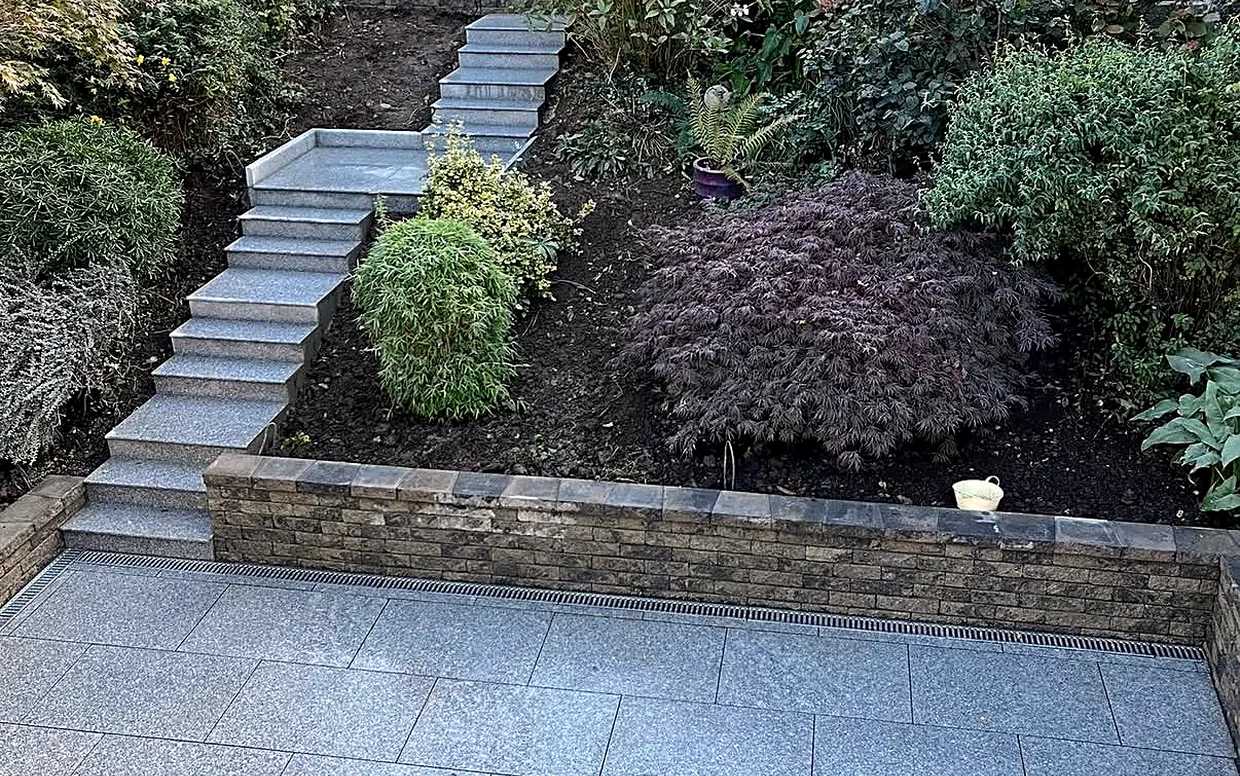
Granite is the hardest of the three natural stones and takes the most wear, so it suits a busy patio or a run from a driveway. It tends to cost more to cut and lay. Silver and dark greys are the usual choice, and a border in a second tone is a common finish.
What About Concrete Paving Slabs?
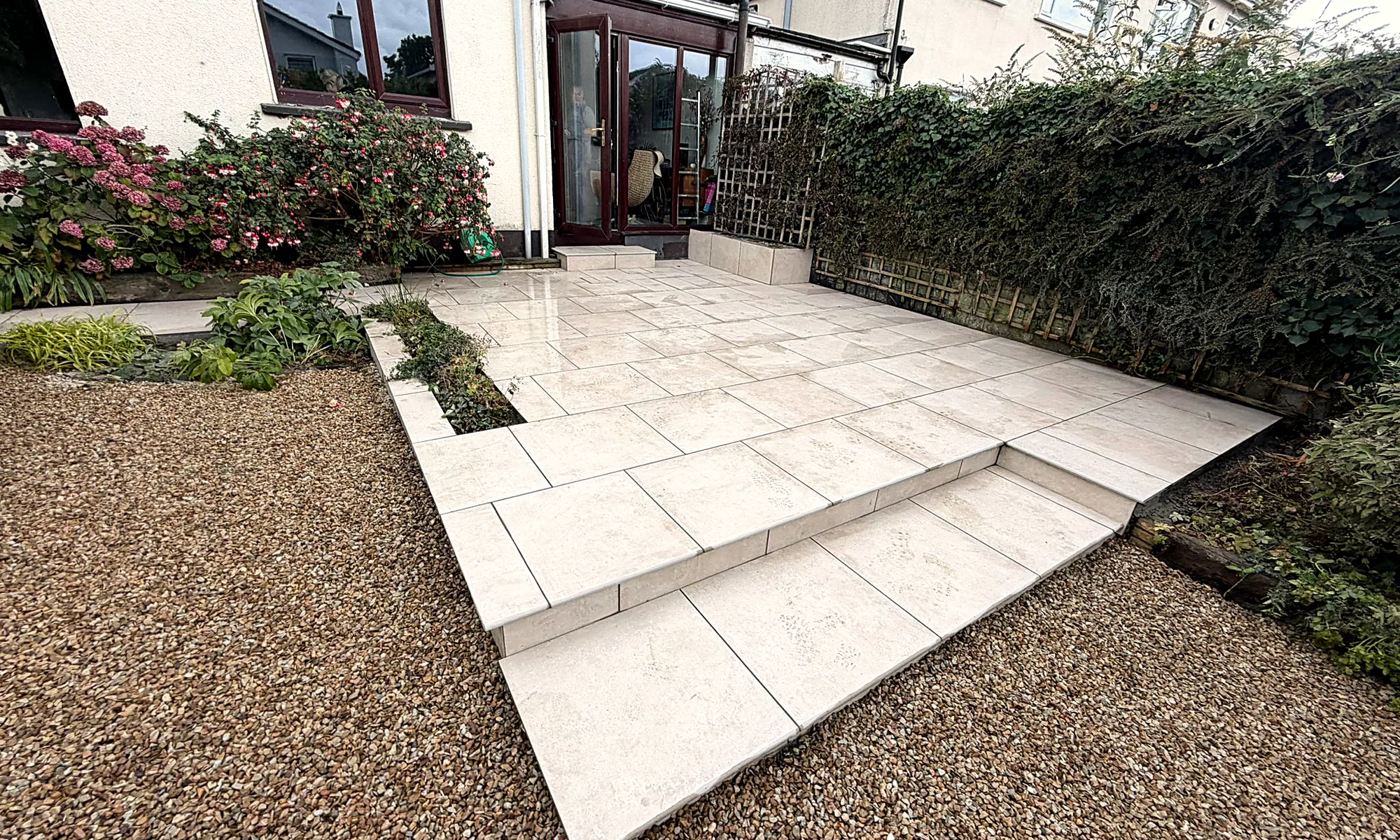
Concrete slabs are the lowest-cost option to buy, and they come in plenty of sizes. The colour sits in the surface, so they fade and hold moss sooner than stone or porcelain. On the Stillorgan patio, the old slabs came up and cream porcelain went down in their place.
Choosing slabs? Send James a photo of the garden and he will tell you straight what suits it.
Send a photoWhat Size Of Slab Should You Pick?
Large slabs make a small garden look bigger, because there are fewer joints to catch the eye, and they suit porcelain and limestone. They need a flat, well-prepared bed, and two people or a machine to place them. Smaller or mixed sizes suit sandstone and a more traditional house, and they take more laying time.
What Goes Under The Slabs?
A compacted stone base, then a full bound mortar bed, with the falls set so water runs clear of the house. That is what keeps any slab flat. One customer put it this way: “The quality of the construction is excellent, layer by layer.” A patio on a poor bed fails whichever slab you pick, and patio repairs are mostly that fault put right.
Porcelain Patio & Garden
Can You See Slabs Before You Choose?
Yes. We bring samples to the free site visit, so you can hold them against the house in your own light. What a patio costs depends on the slab, the size and the ground, and James gives the figure in writing. See the patios we have laid or ask for a free quote.