
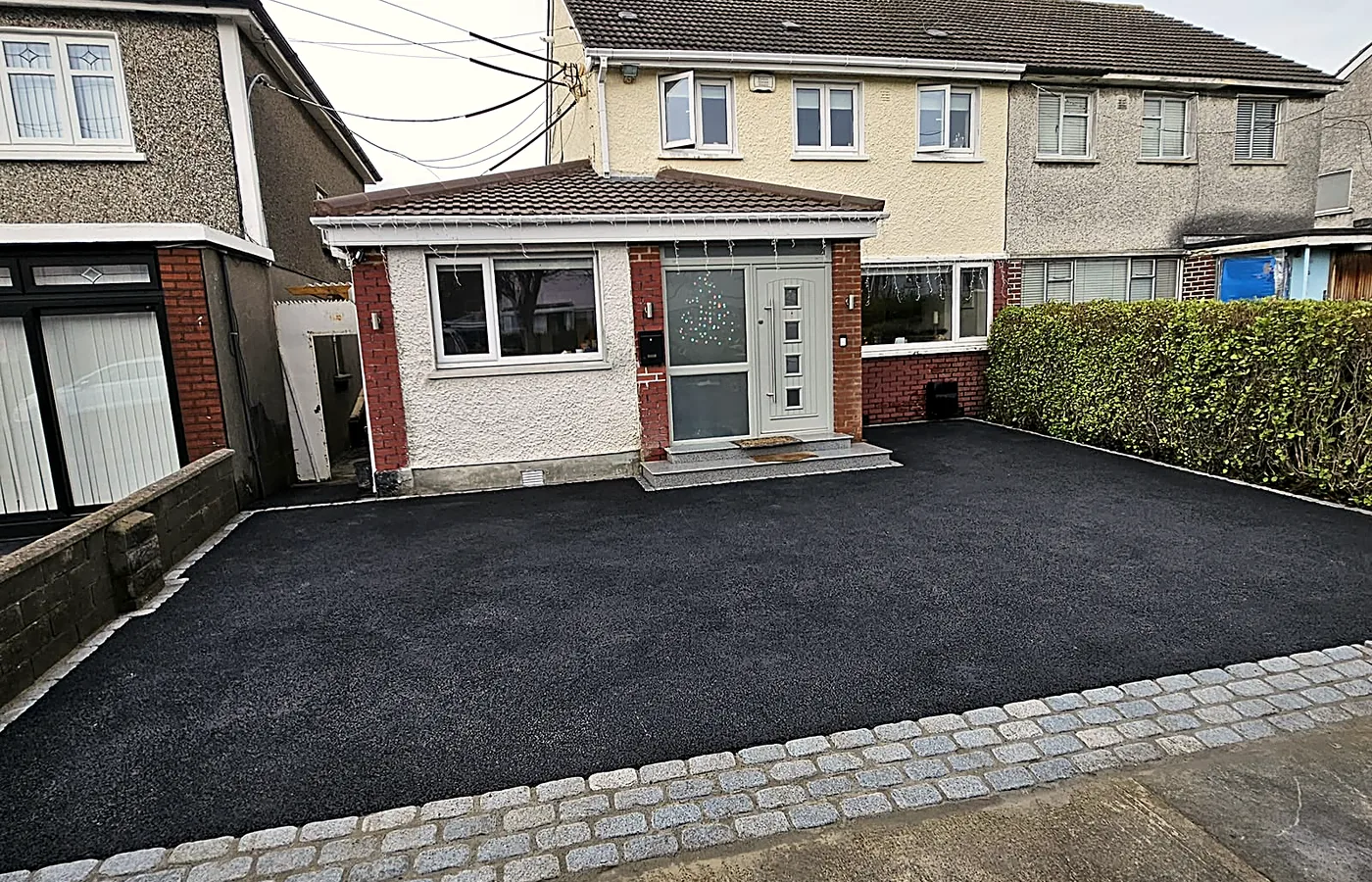
Asphalt driveway maintenance in South Dublin comes down to keeping water moving, catching small cracks early and keeping the edges and gullies clear. The surface itself needs very little. What it needs is a dry base under it, which means the falls, the drains and the edges doing their job through a wet Dublin winter. Here is what to do each year, what to leave alone, and when a crack is a job for a repair rather than a brush. If you are looking at a new driveway rather than looking after one, see our asphalt and tarmac driveways.
At a glance
- Walk the driveway twice a year, in spring and in autumn
- Keep gullies, channel drains and edges clear so water can leave
- Seal small cracks before winter; a soft or sinking patch needs a look
What looking after an asphalt driveway involves
An asphalt or tarmac driveway is a dense, sealed surface over a compacted stone base. Whether the quote called it tarmac or asphalt makes little difference to the upkeep, because the difference is in the binder and both behave the same way in the rain. Nothing grows in the surface and nothing needs feeding, so maintenance is about protecting what is underneath. Water that cannot get away sits on the surface, works into the smallest opening, freezes in a cold snap and lifts it. Most of what follows is about stopping that one thing from happening.
The routine is short. Walk the driveway twice a year, once in spring after the frost and once in autumn before the leaves come down. Brush it, clear the gullies, look along the edges, and deal with anything you find while it is small. For most houses in South Dublin, that is the whole job.
Keep water moving off the surface
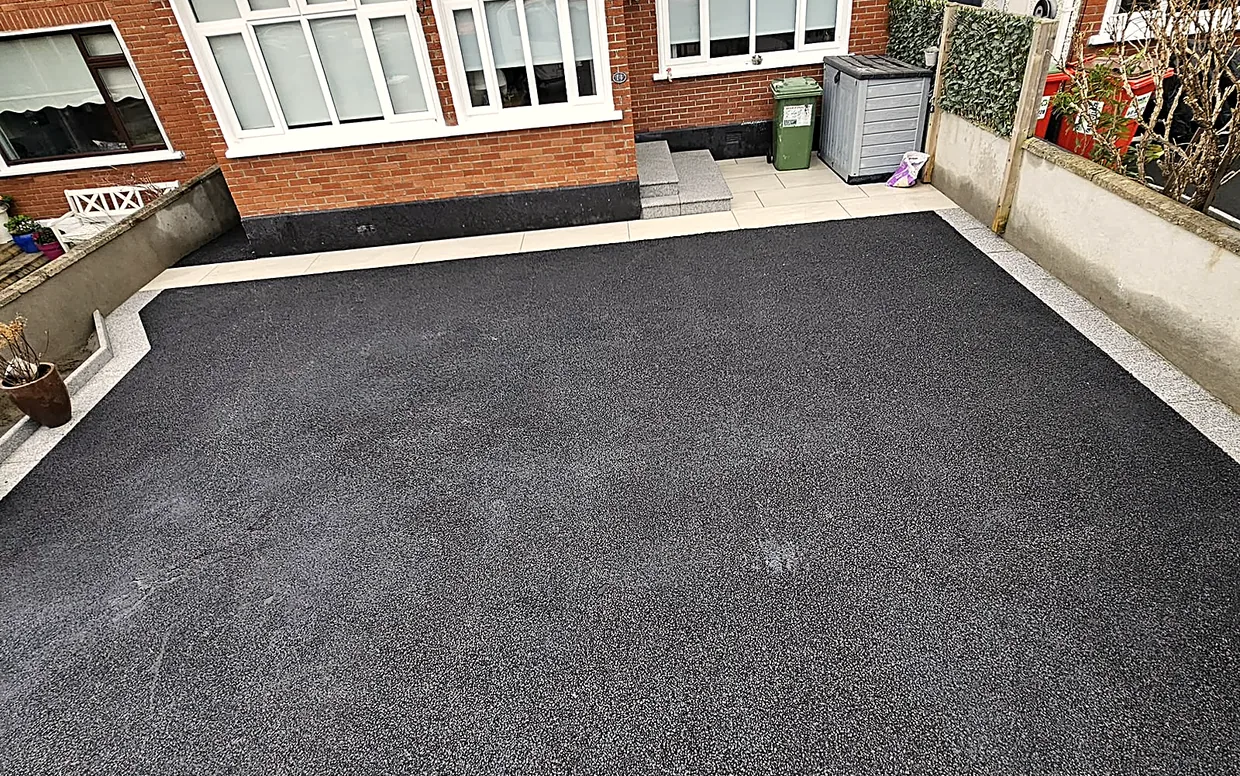
A driveway is laid to falls, so that rain runs to a gully, a channel drain or a planted bed rather than to the house or the road. Those falls only work if the outlet is clear. Leaves, moss and grit collect in a channel drain over a season, and a blocked drain turns the lowest corner of the driveway into a pond. Lift the grating and clear it when you clear the house gutters.
Watch the edge where the lawn or a bed meets the asphalt. Soil and grass creep over the border, hold damp against the edge and stop water leaving the surface. Keep that line cut back so the granite or cobble edging shows. Where the ground falls towards the house, the drain at the door is the one outlet that matters most, so check it first.
Deal with cracks and soft spots while they are small
A hairline crack in the surface is not a failure. It is an opening for water, and the time to deal with it is before winter, not after. A small surface crack can be sealed with a cold crack filler from a builders' merchant; brush it clean and let it dry first, or the filler will not take. A crack opening along the edge usually means the edge restraint has moved, and that needs a proper repair rather than filler.
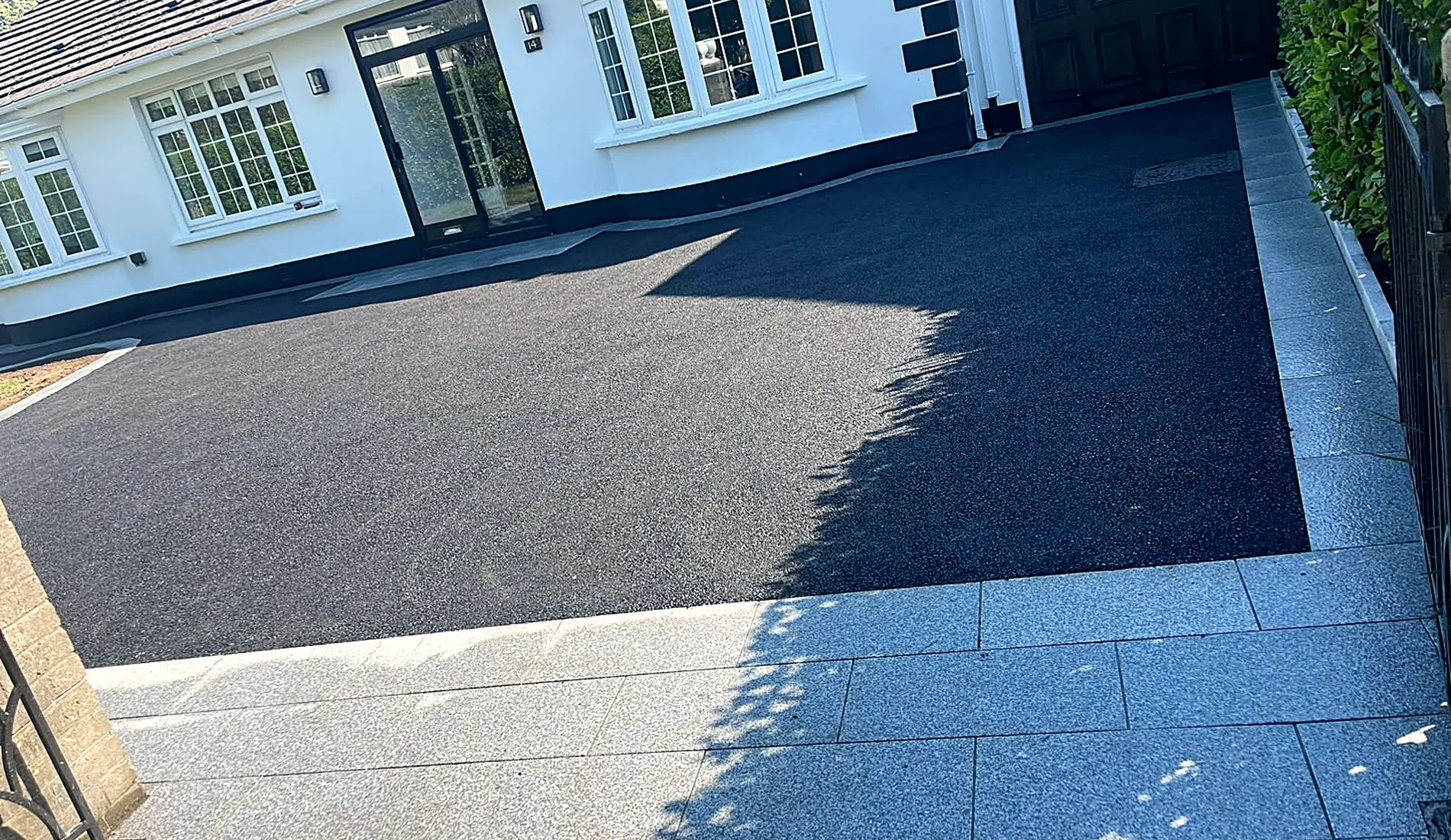
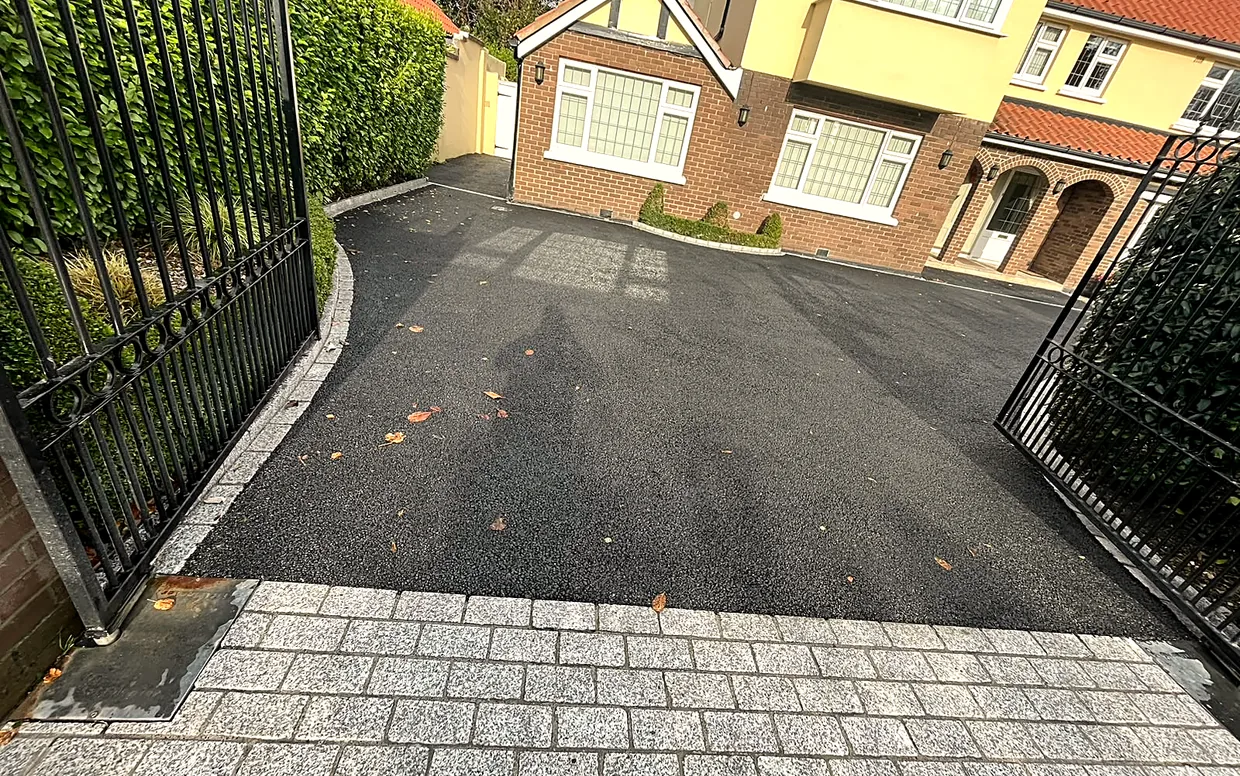
A soft spot, a dip that holds water, or a patch that moves underfoot is a base problem, not a surface problem. The right fix is to cut the area back to sound material, rebuild the base and relay the surface, which is what our driveway repairs service does. Filling it over from the top looks fine for a month and opens again at the first frost. The Ballinteer tarmac driveway on our projects page shows the difference: a worn surface between brick piers was taken out and rebuilt on a fresh compacted base with granite edging set on concrete, rather than patched over.
Cracks or puddles on yours? Send James a photo and he will tell you straight whether it is a repair or a relay.
Send a photoMoss, leaves, oil and heavy loads
Moss takes hold in the shaded, damp corners first, often along a north-facing wall or under a hedge. A stiff brush on a dry day deals with it. If you use a pressure washer, keep the nozzle moving and the pressure moderate. Held on one spot on a warm day, it can strip the fine stone out of the surface and leave a rough patch that then holds water.
Oil and diesel soften the binder in asphalt, so wipe up a drip from a car or a mower as soon as you see it rather than letting it soak in. Keep heavy point loads off the surface in warm weather. A skip, a jack or a trailer leg left on hot asphalt will press a dent into it; a board under the load spreads the weight and avoids the mark.
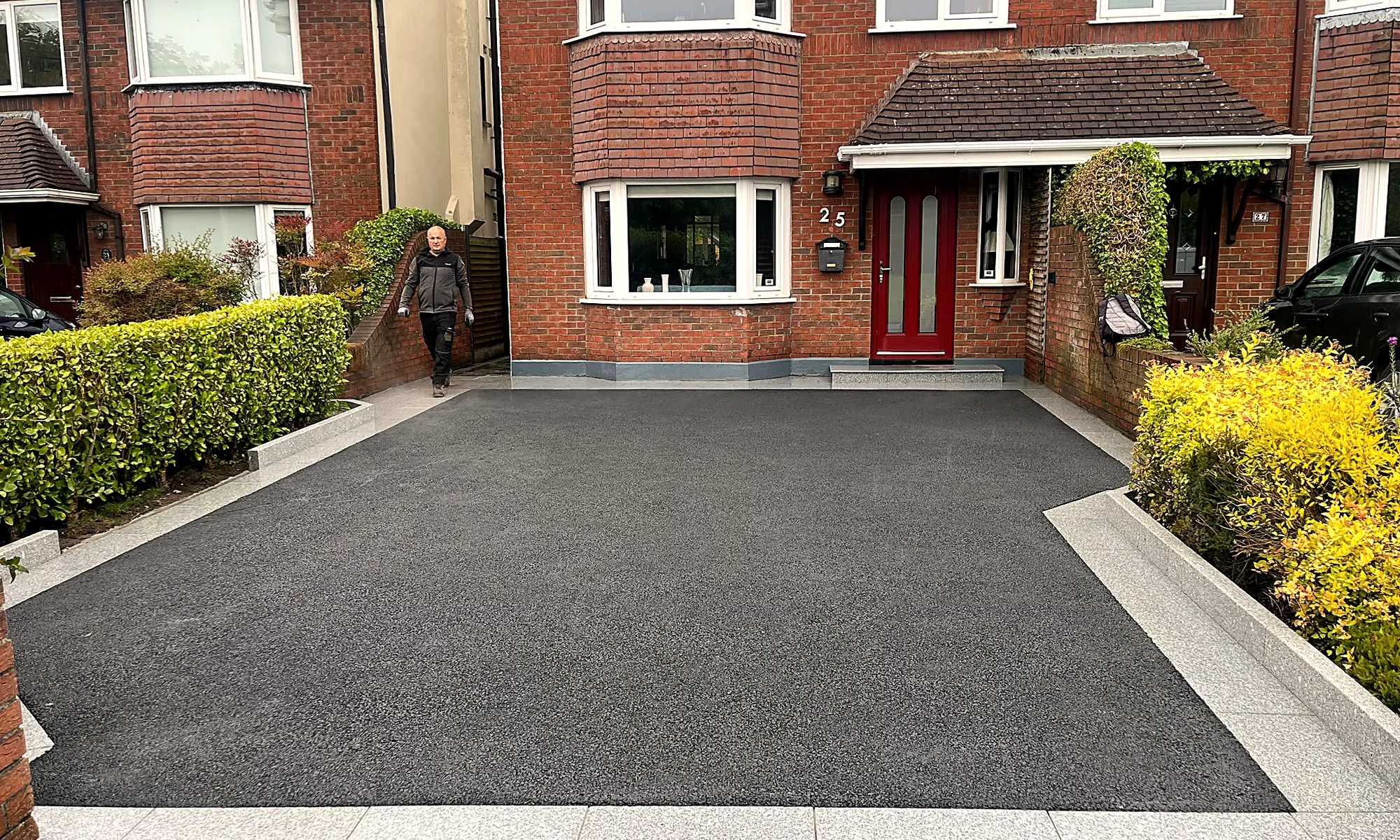
Tarmac driveway & granite edging
Does an asphalt driveway in Ireland need sealing?
Not to last. A properly laid asphalt driveway does not need a sealant to stay sound. A sealer is a cosmetic choice that keeps the surface a darker black for a while; it does nothing for a crack that was already there and nothing for the base. The drainage and the edges matter far more, as our guide to how long a tarmac driveway lasts explains.
How often should you check an asphalt driveway?
Twice a year is enough for most homes: spring, after the last frost, and autumn, before the leaves fall. After a storm or a hard week of frost, a quick look at the drains and the edges is worth the few minutes it takes, because a blocked gully does its damage quietly.
Can a cracked asphalt driveway be repaired, or does it need relaying?
Most can be repaired. A surface crack is sealed. A sunken or broken area is cut out, the base rebuilt and the patch relaid and rolled in. If the whole surface is cracked in a web, or sinking in several places, the base underneath has failed and relaying is the honest answer. We will tell you which at the site visit, and our asphalt and tarmac driveways page shows what a new one involves.
Do you repair and maintain asphalt driveways in South Dublin?
Yes. We repair, resurface and lay asphalt and tarmac driveways across South Dublin. We are open 7 days for free quotations and advice, with a free site visit and a written quotation. One customer's review of our work put it plainly: “The quality of the construction is excellent, layer by layer.” Call 087 369 7911 or request a free quote and we will call out to take a look.