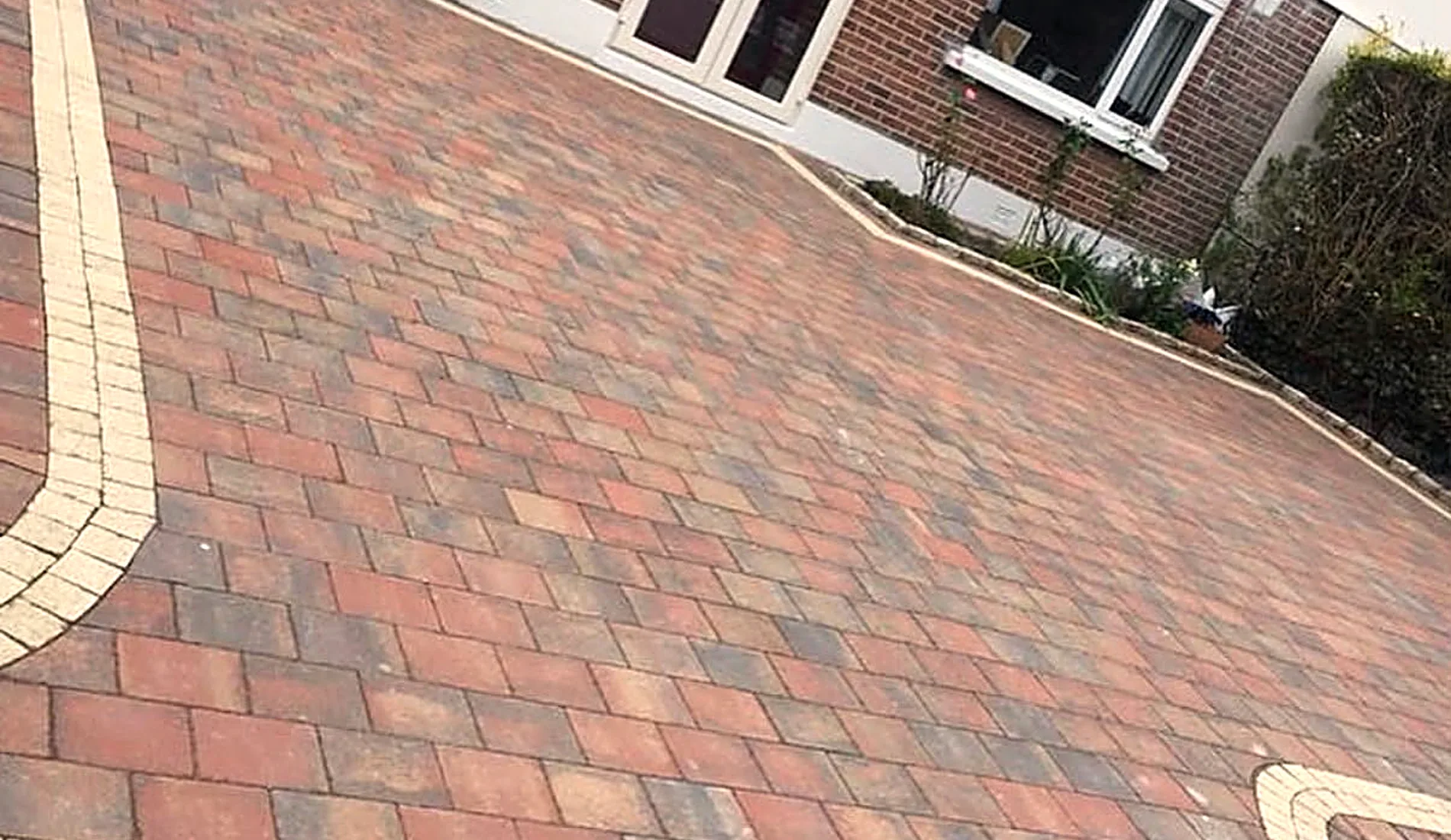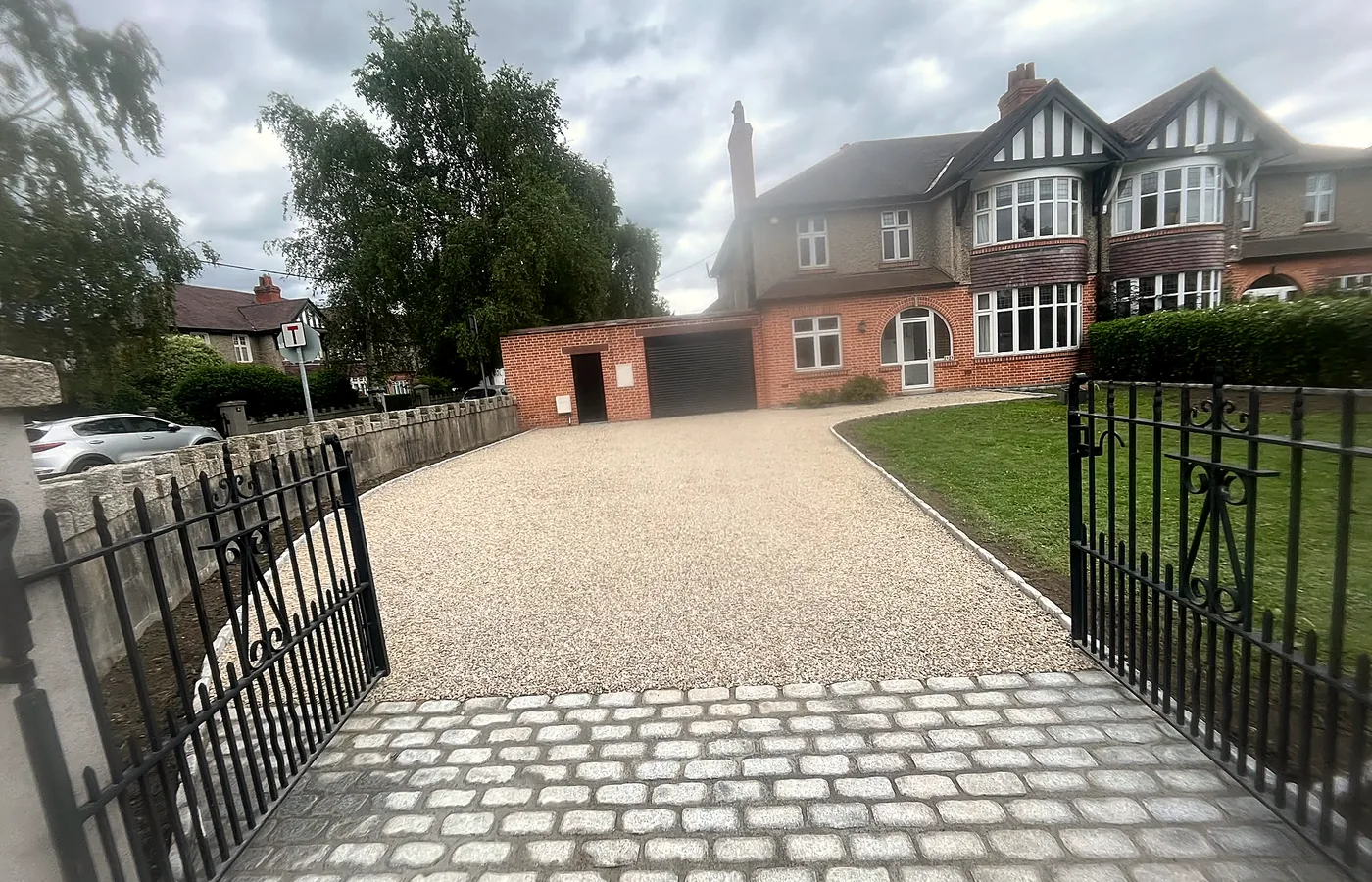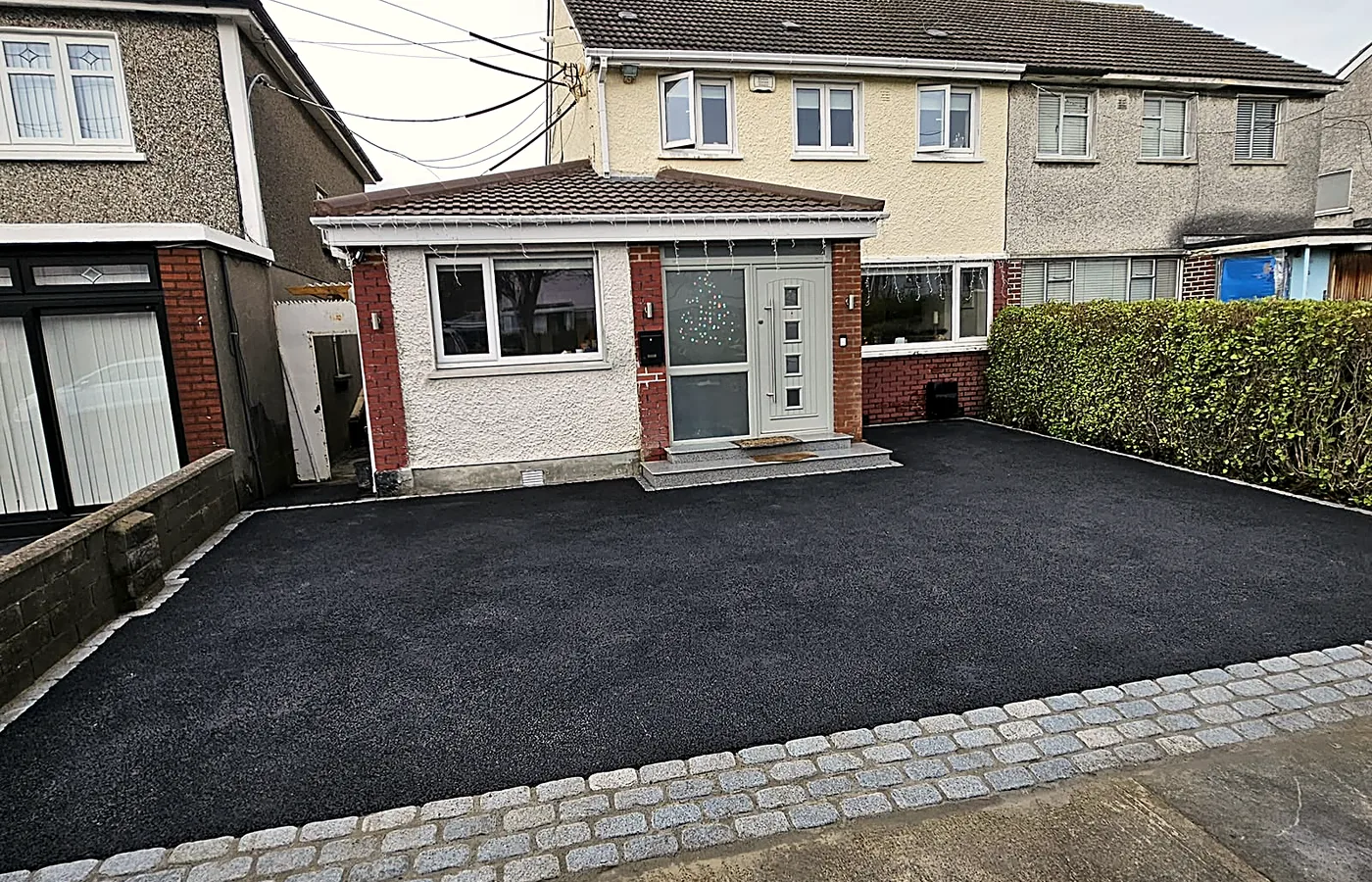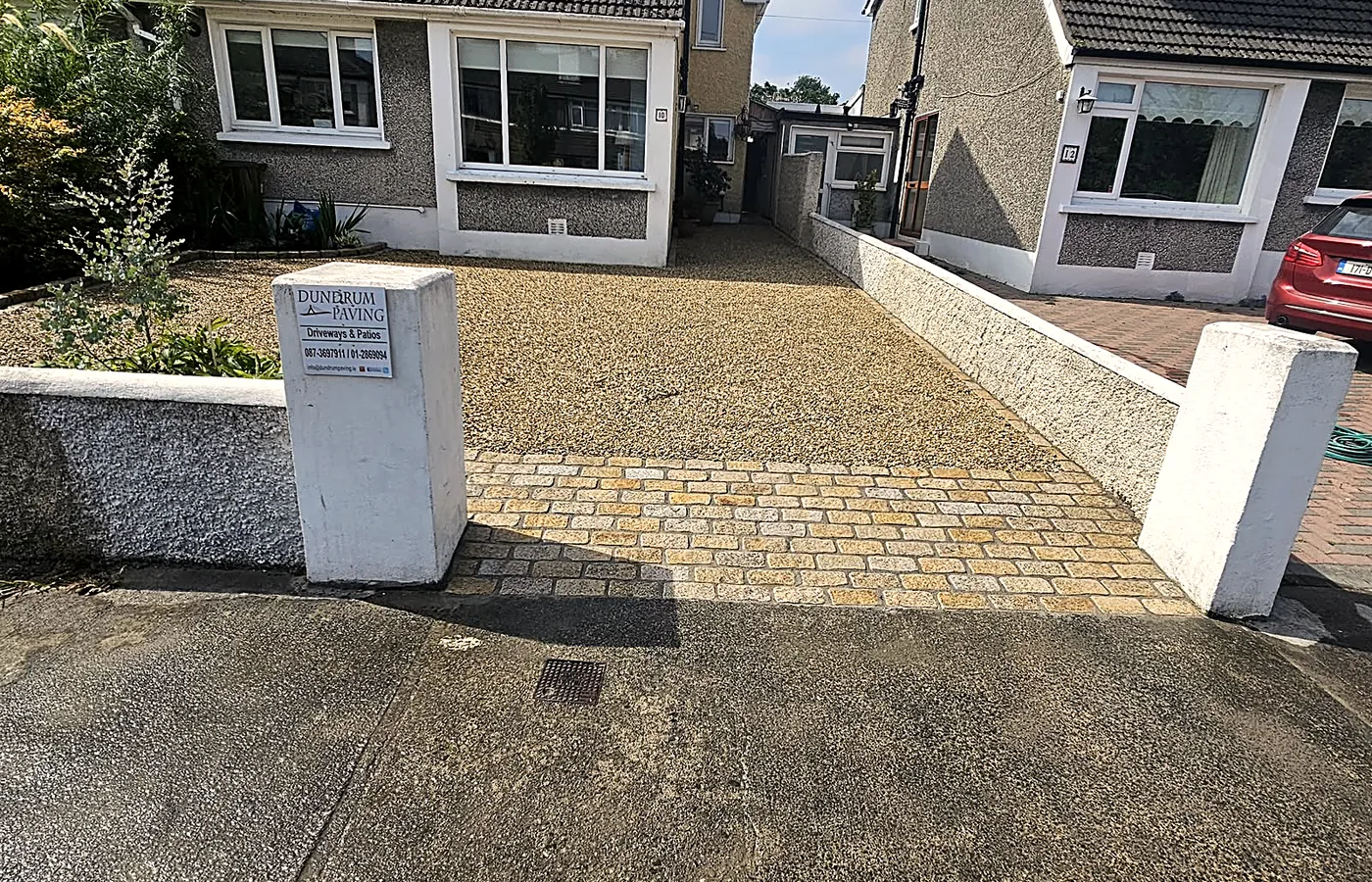

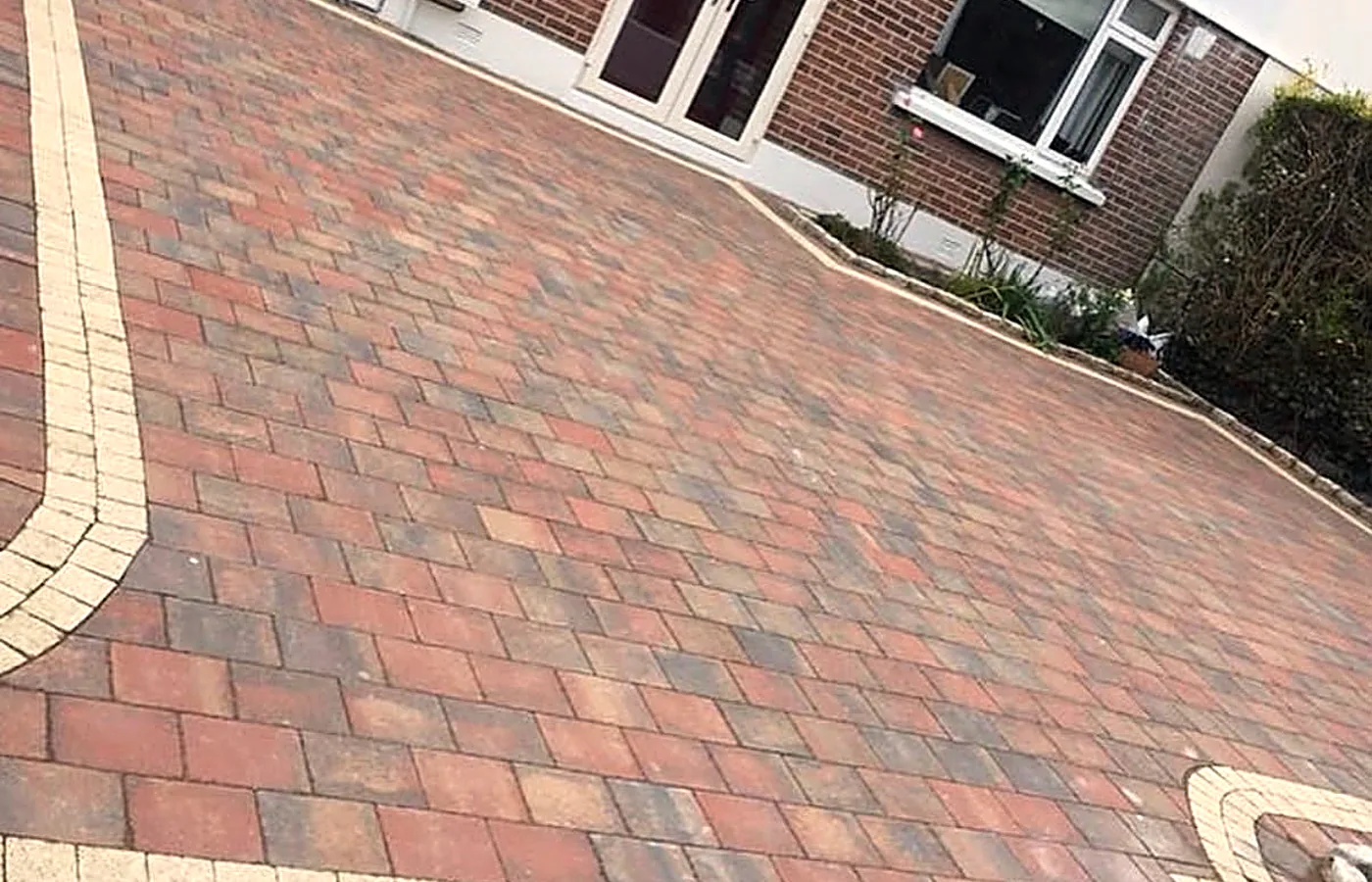
A cobblelock patio is hard-wearing, easy to repair a section at a time and costs less to lay than most stone, which makes it a good choice where a patio runs on from a paved drive or takes real wear. It has more joints than porcelain or stone, so it needs a little more looking after. James lays block paving, porcelain and natural stone across South Dublin. See the cobblelock and patios we have laid.
At a glance
- Hard-wearing and easy to repair a section at a time
- More joints than slabs, so keep them full of kiln-dried sand
- Built on the same compacted base as a driveway
Where Does A Cobblelock Patio Work Best?
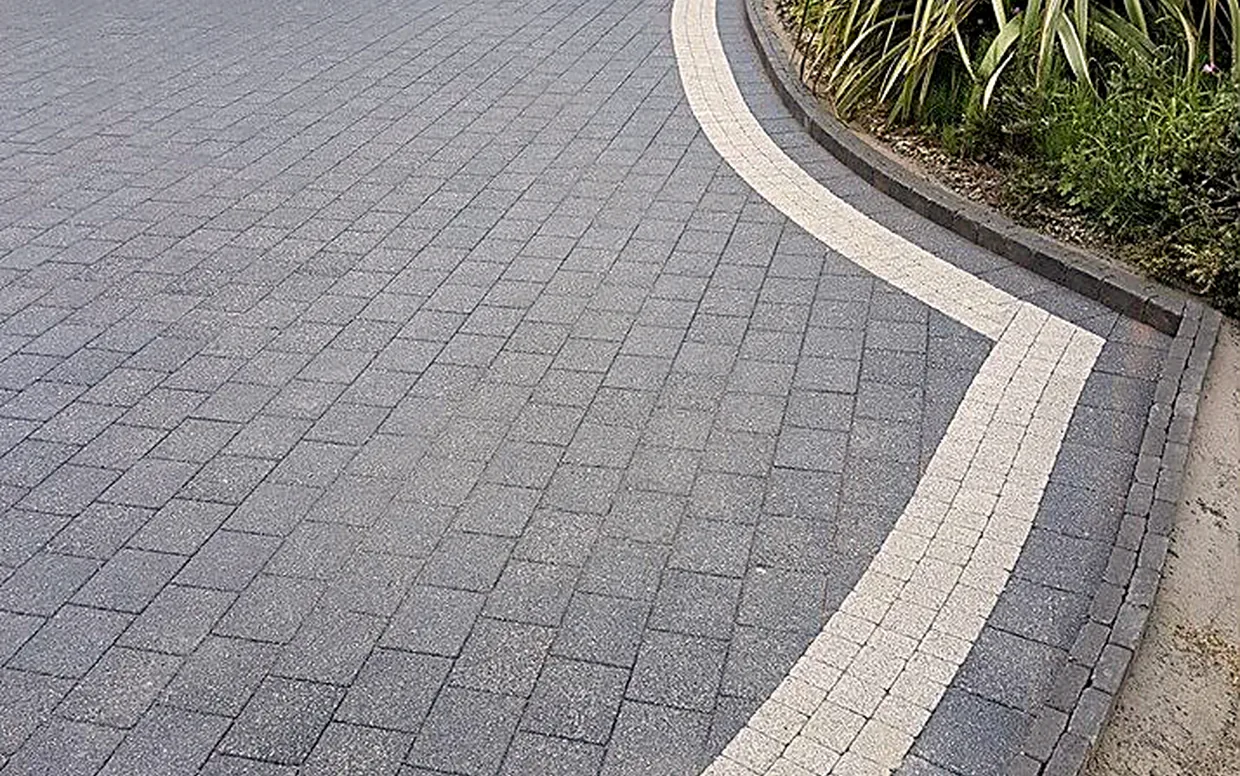
Where the back garden takes wear or carries on from the side passage: bins, bikes, a car now and then. Blocks spread a load across the whole surface, and a smaller block suits a narrow or awkward space, because it cuts in neatly round a corner or a curve. It also ties in well if the front of the house already has cobblelock driveways in the same colour.
What Are The Downsides Of A Cobblelock Patio?
The joints. There are many more of them than on large slabs, and they can collect dirt and moss in a shaded garden if they are not kept full. Tables and chairs also sit less steadily on a block surface than on a flat slab, and the look is busier, which can make a small garden feel smaller.
Cobblelock Or Porcelain For A Patio?
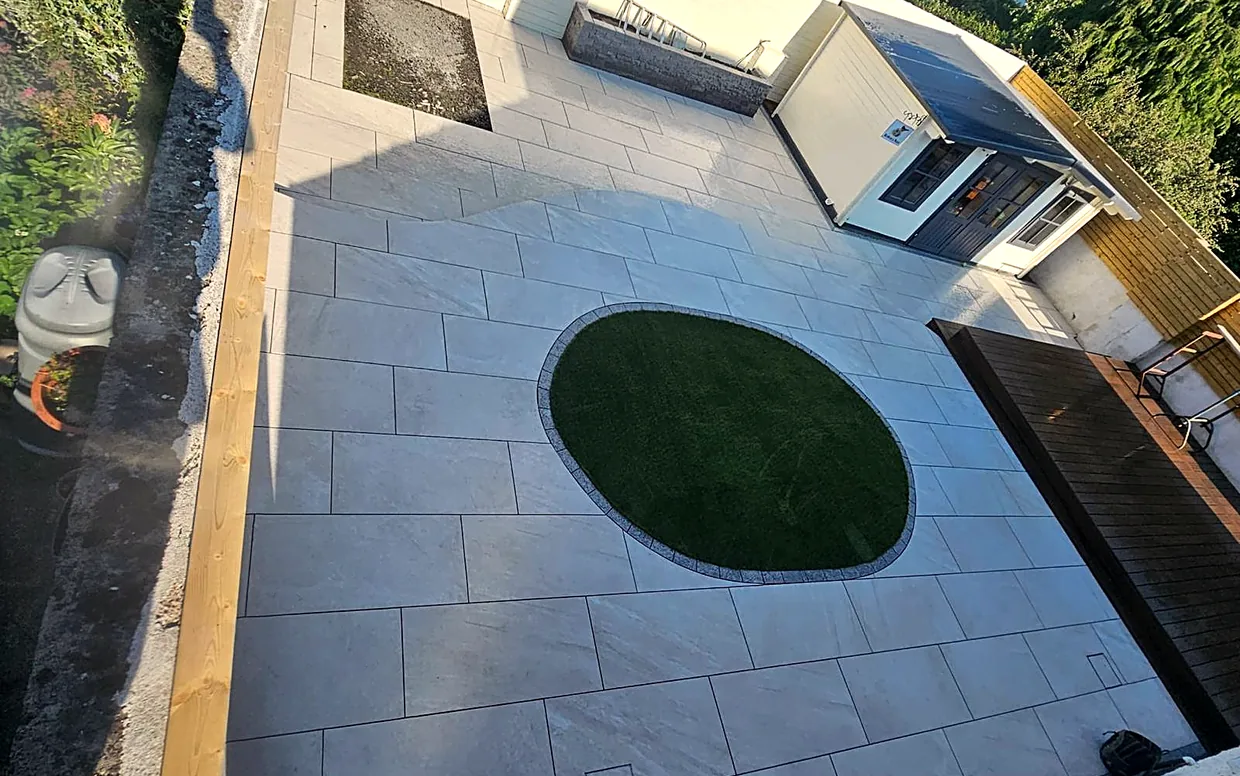
Porcelain gives a flat, clean surface with few joints that needs little more than a wash, and it looks sharper against a modern house. Cobblelock is the more forgiving of the two: a block that gets damaged can be lifted and replaced, and it takes wear that would chip a thin slab. If the patio is mainly for sitting out, most people lean to porcelain patios.
Weighing it up? Send James a photo of the garden and he will tell you straight what suits it.
Send a photoCobblelock Or Natural Stone For A Patio?
Natural stone has more colour and character, and no two slabs are quite the same. It costs more to lay and needs sealing and an occasional wash. Cobblelock has a more uniform look and a wider choice of manufactured colours. Sandstone and limestone are the usual choices for natural stone patios.
How Is A Cobblelock Patio Built?
The same way as a driveway, with a lighter load to carry. The old surface is dug out and carted away, a stone sub-base is compacted and set to falls so water runs away from the house, and the edges are set on a concrete haunch so the blocks cannot creep. The blocks go down on a bed of sharp sand, get compacted in, and the joints are filled with kiln-dried sand. We use Kilsaran and Roadstone materials and bring block samples to the site visit, and new work carries our 10-year written guarantee. One customer wrote of our work: “The quality of the construction is excellent, layer by layer.”
How Do You Stop Weeds In A Cobblelock Patio?
Keep the joints full. Weeds grow in the dirt that collects in open joints, so joints packed with kiln-dried sand and topped up when they settle give them nothing to root in. A sweep and a wash do the rest. If an older patio has gone green and sunk in places, patio repairs can often bring it back.
What Does A Cobblelock Patio Cost?
It depends on the area, how much has to be dug out, the block and pattern, and any steps or drainage, the same things that set cobblelock driveway cost. James gives the figure in writing after a free site visit. See the patios we have laid, or ask for a free quote.